


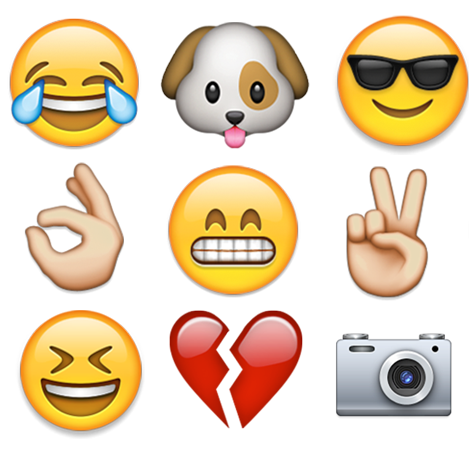
Emoji
Emoji are ideograms and smileys used in electronic messages and web pages. Emoji exist in different variations, including facial expressions, objects, places and kinds of climate, and creatures. They are much similar to emoticons, yet emoji are real pictures rather than typographics.
The word emoji comes from Japanese e (çµµ, "picture") + Moji (æ–‡å—, "character"). Emoji is also known as the pictograph.
The first emoji was created in 1999 in Japan by Shigetaka Kurita. He was part of the team working on NTT DoCoMo's i-mode mobile Internet platform. Kurita took motivation from weather forecast that used the symbol to show weather. He gathered normal pictures including open signs, climate images, the zodiac and comic-book-style pictures, for example, a light or a ticking bomb.
Kurita created the first 180 emoji based on the expressions that he observed people making and other things in the city. Emoji become very popular in the year 2010 when it added to several mobile operating systems.
From 2010 onwards, some emoji character sets have been fused into Unicode, a standard framework for ordering characters, which has enabled them to be utilized outside Japan and to be institutionalized crosswise over various working frameworks.
Kurita's innovation roused “The Emoji Movie”, an energized film by Sony Pictures about emojis that live in the universe of a cell phone. It presently can't seem to appear in Japan, however, was very popular in the United States.
In July 2013, google embedded native emoji support to Android with Android 4.3 and to the Google Keyboard in November 2013 for devices running Android 4.4 and later. Emoji are also supported by the Google Hangouts application (independent of the keyboard in use), in both Hangouts and SMS modes. Today, Everyone on 17 July Celebrated as “World Emoji Day”.




0 Comments